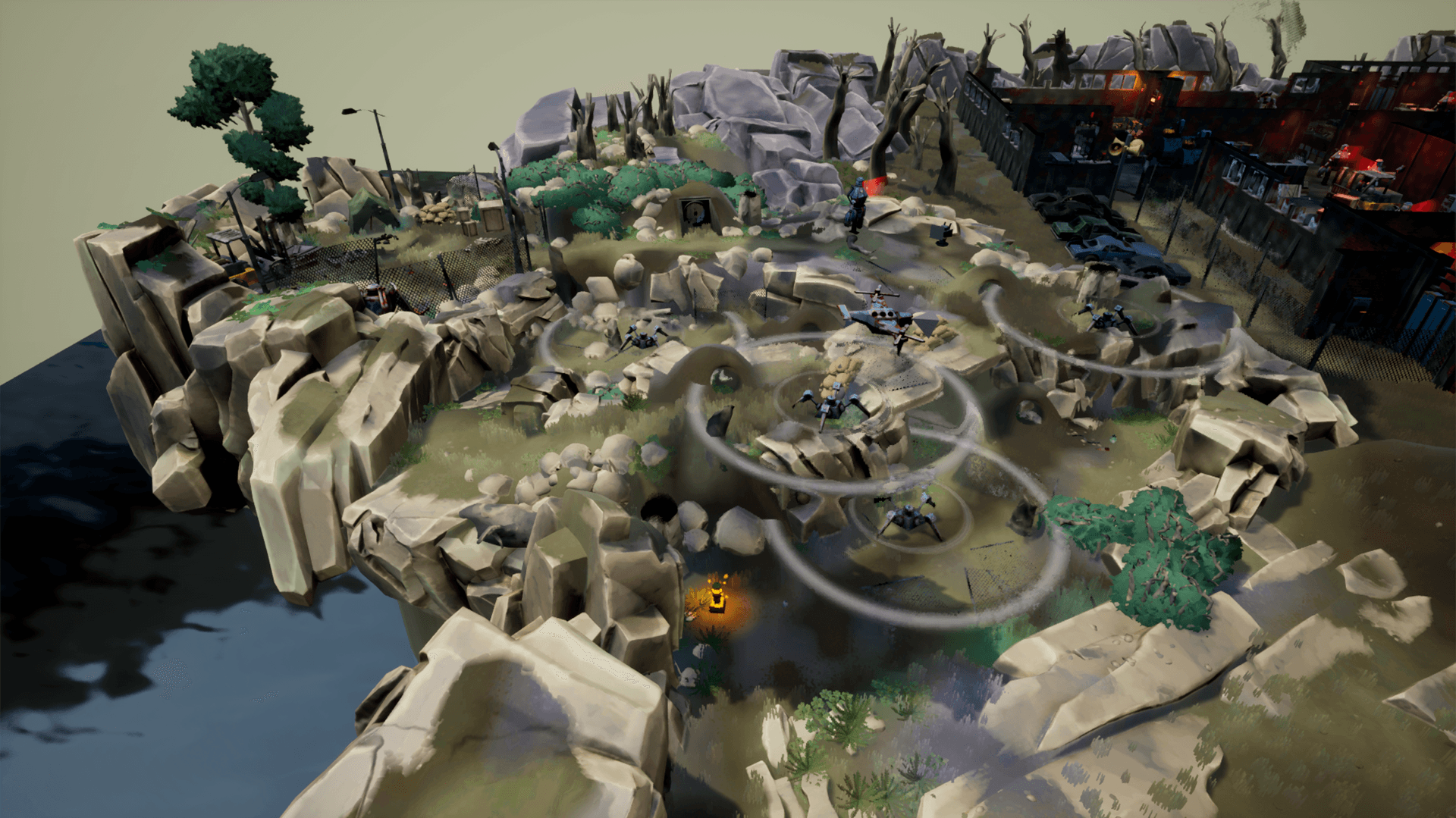
Not My War is a 3D isometric stealth and exploration game where the player encarnates a small white ferret. Explore, survive, and escape an island overrun by deadly machines.
I worked as a Game and Level Designer on this project, designing core stealth mechanics, levels, and gameplay systems while collaborating closely with the art and programming teams.
Awards: Winner for Best Educational Institution Game (Iris Games Awards 2026), Finalist for Best University Game (BIG Conference 2025) and Best PC/Console Game (Pucela Game Awards 2025)
Design Breakdowns
My Contributions
Designed and documented core mechanics and systems of the game:
Main character mechanics such as basic movement with gradual acceleration using a controller, sprinting, crouching, and camera panning to give the player more freedom to plan their next step.
Camera, taking into account the isometric view and adding a deadzone to make camera movement smooth.
Stealth:
Types of detection senses such as visual and hearing.
Floor types with different noise levels and movement penalties.
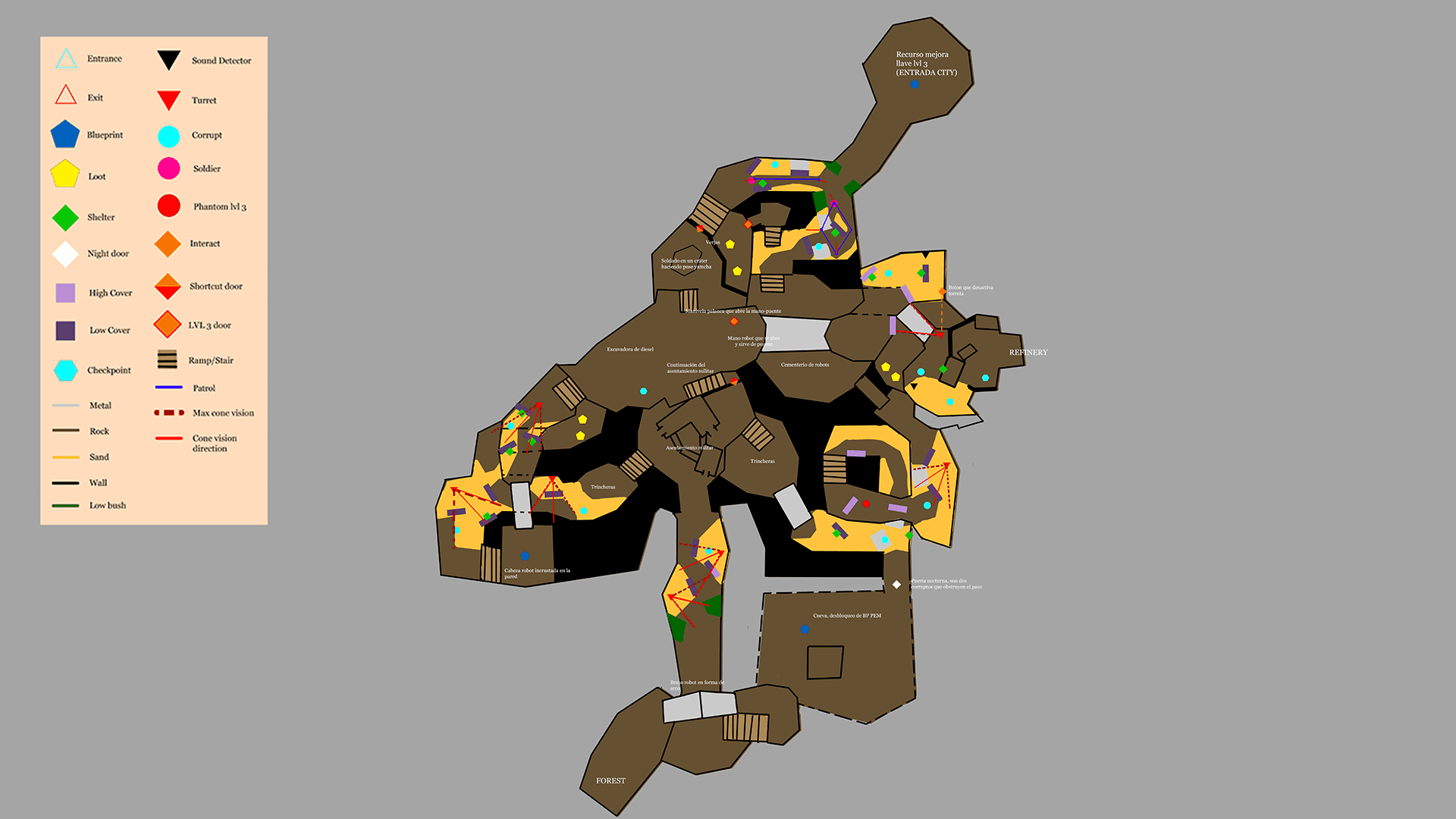
Various types of cover such as high cover, low cover, and bushes.
6 Different enemy types with unique behaviors and detection capabilities.
AI system with different states such as patrol, suspicious, alert, and pursuit.
Gadgets system, connected to a consumable object system.
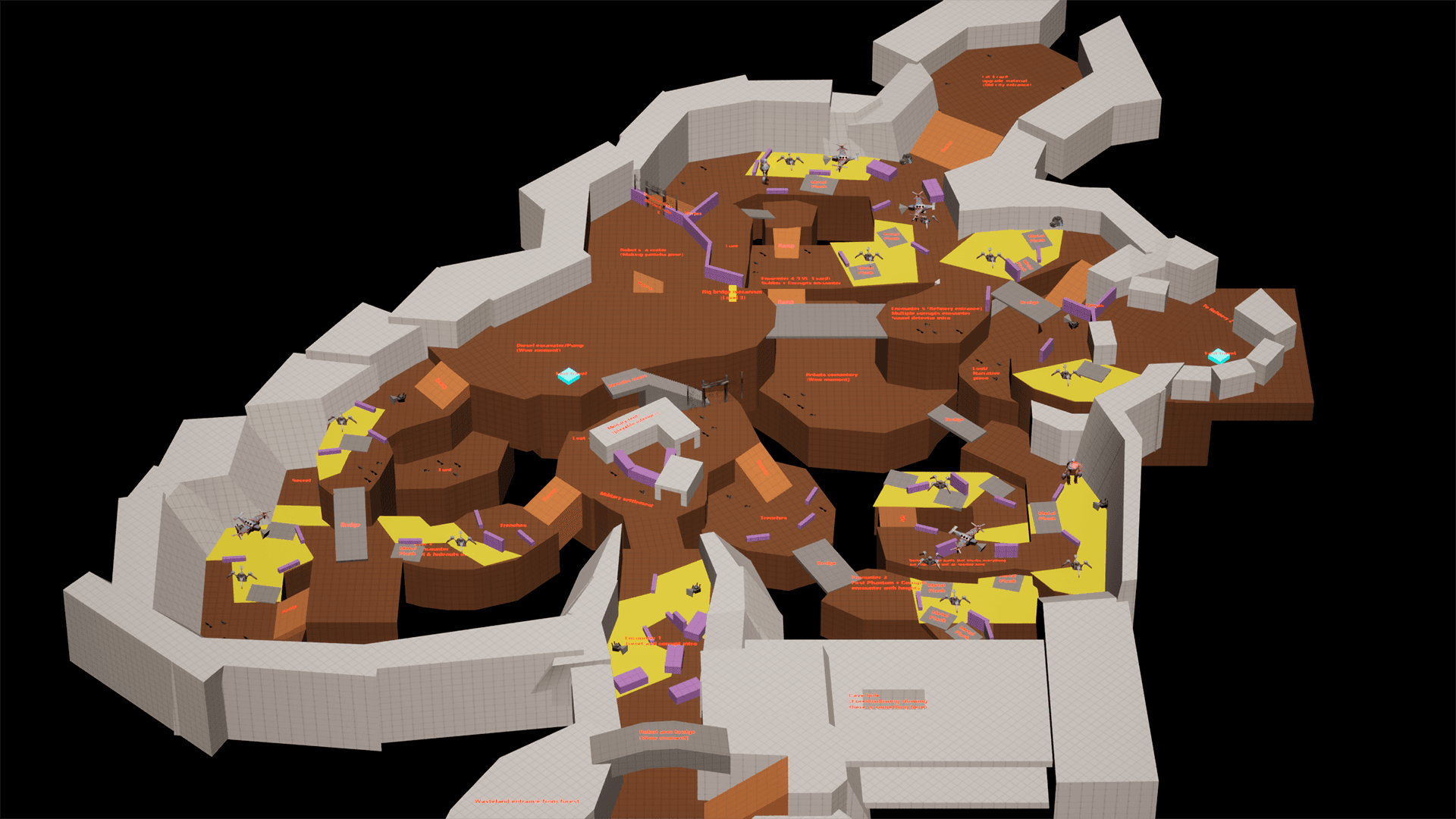
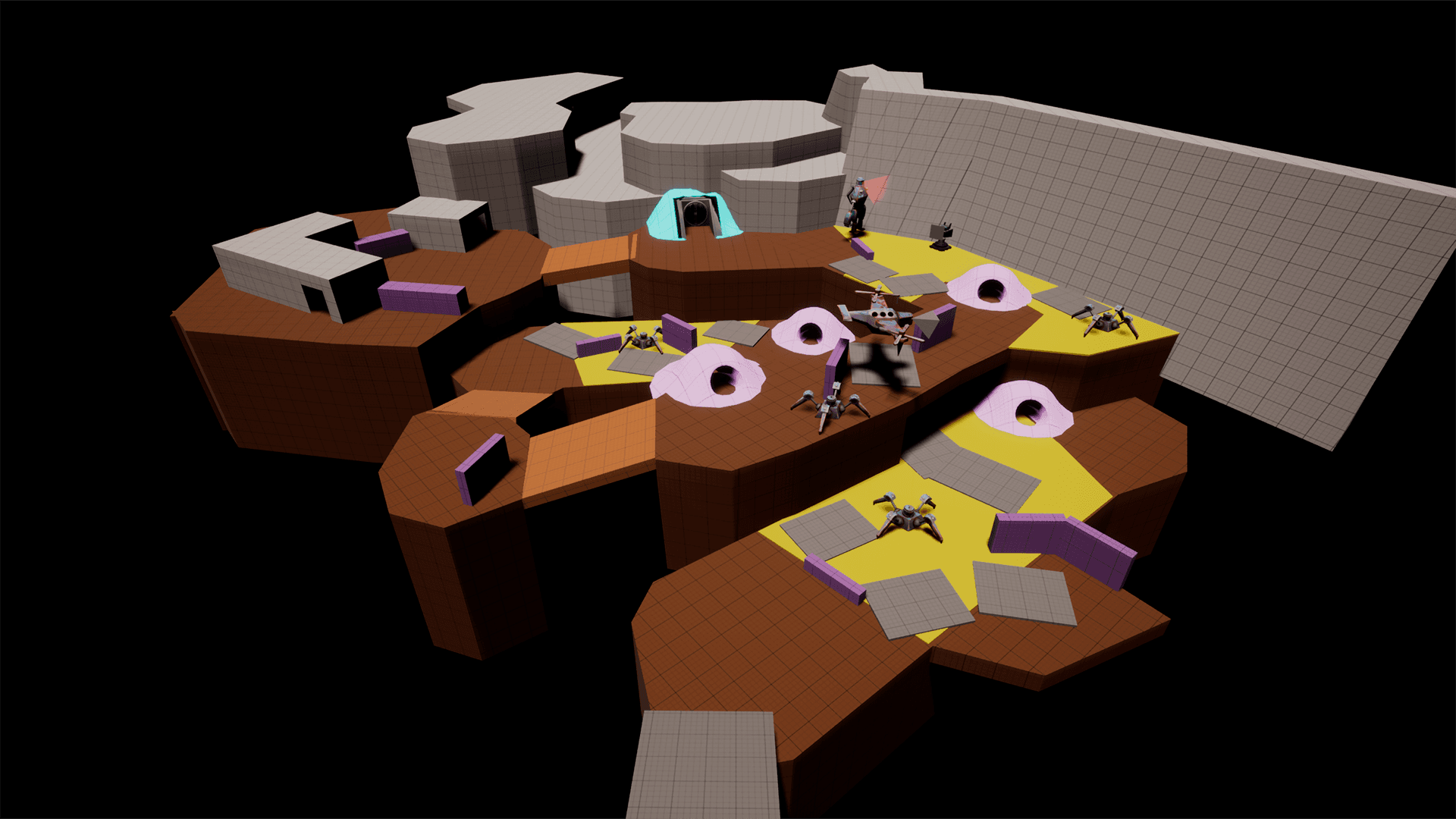
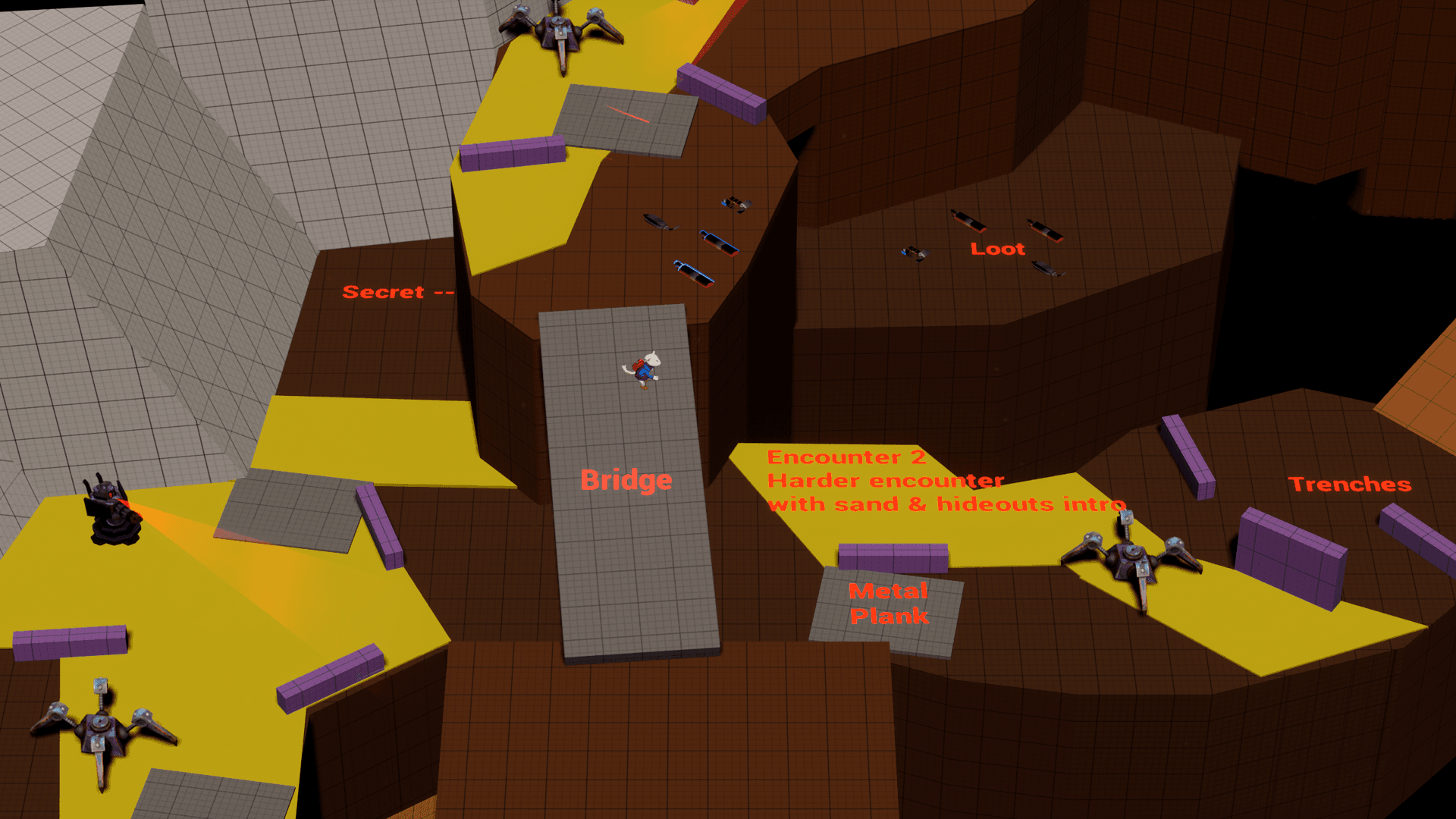
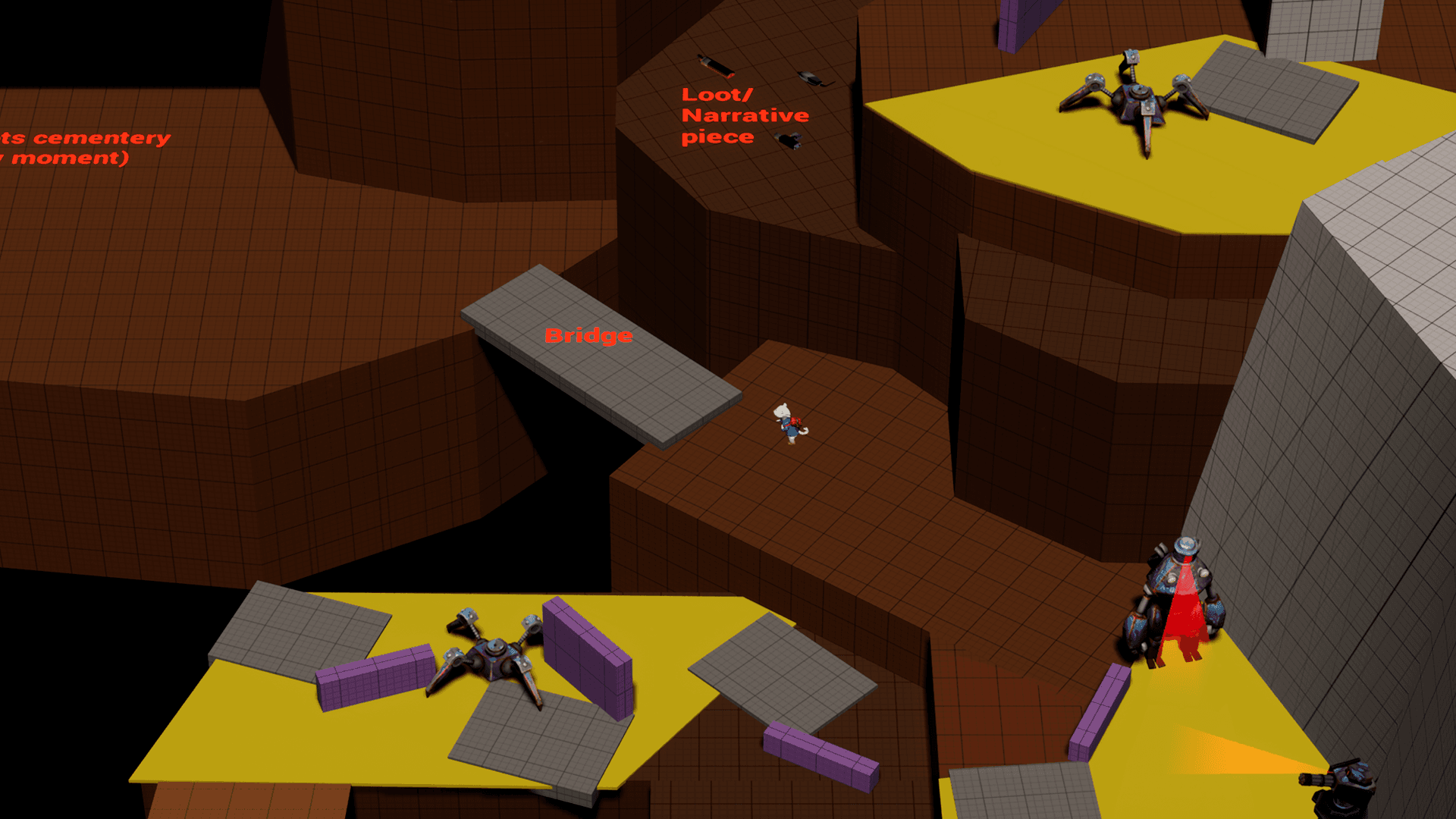
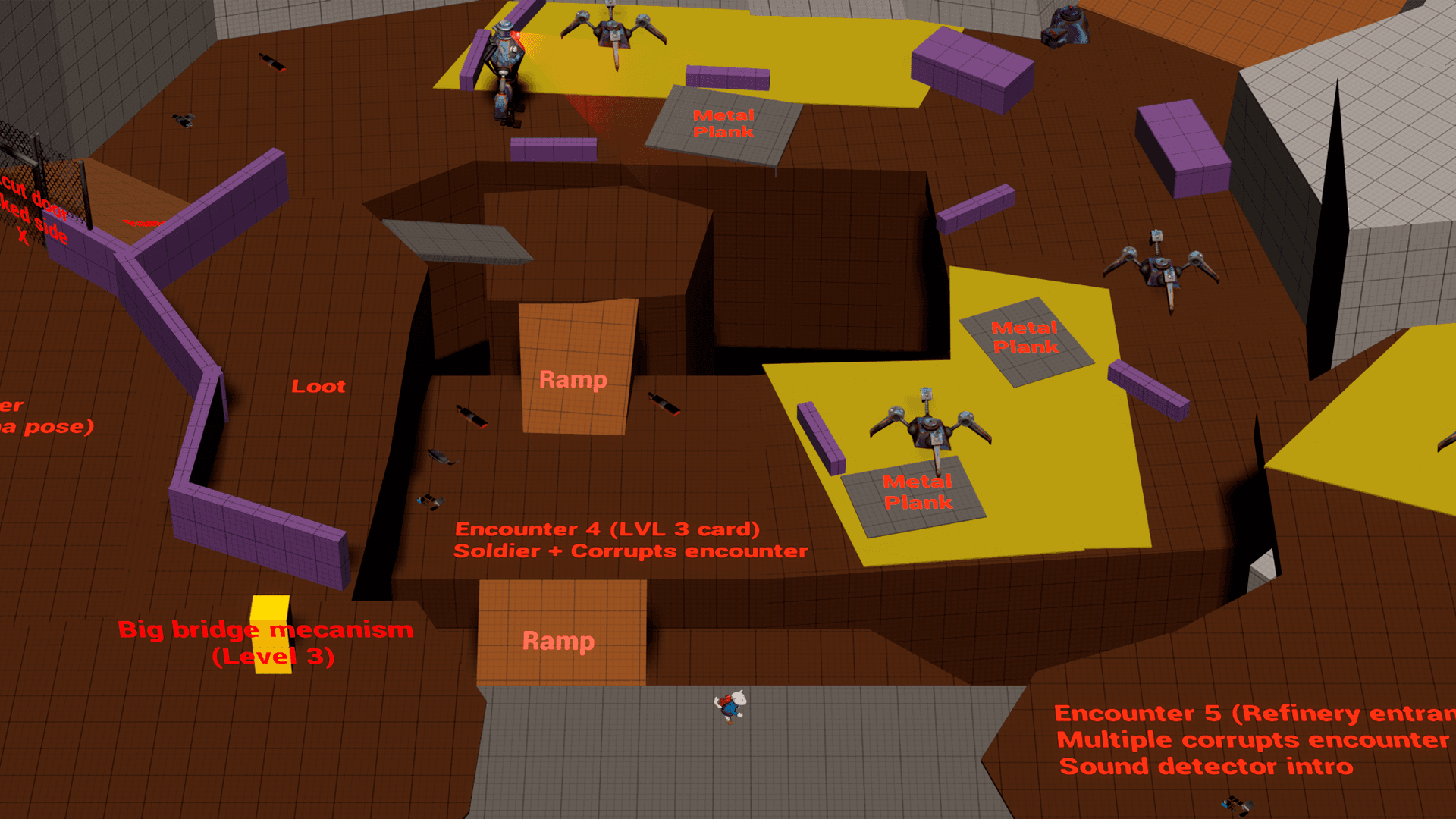
Designed level layouts and made blockouts of 2 major levels with over 8 sublevels each.
Designed and implemented tutorization.
Designed a tutorial panel system to teach core mechanics such as gadgets.
Designed a control hint system to teach basic inputs of the game.
Designed and implemented the tutorial level of the game, ensuring that players learn the basics in a safe and gradual onboarding section.
Designed and tested over 15 stealth encounters.
Balanced core-gameplay elements such as player controller and enemies.
Prototyped a door system (shortcut door, locked by key door with different levels and lever door).
Designed UX systems to increase gameplay feedback to the player.
Implemented many systems developed by the programming team into the levels.
Worked side by side with art and programming teams to bring all the ideas together.
Exhaustive testing and QA of the game.
Reported and documented every bug I found to ease the programming team's job.